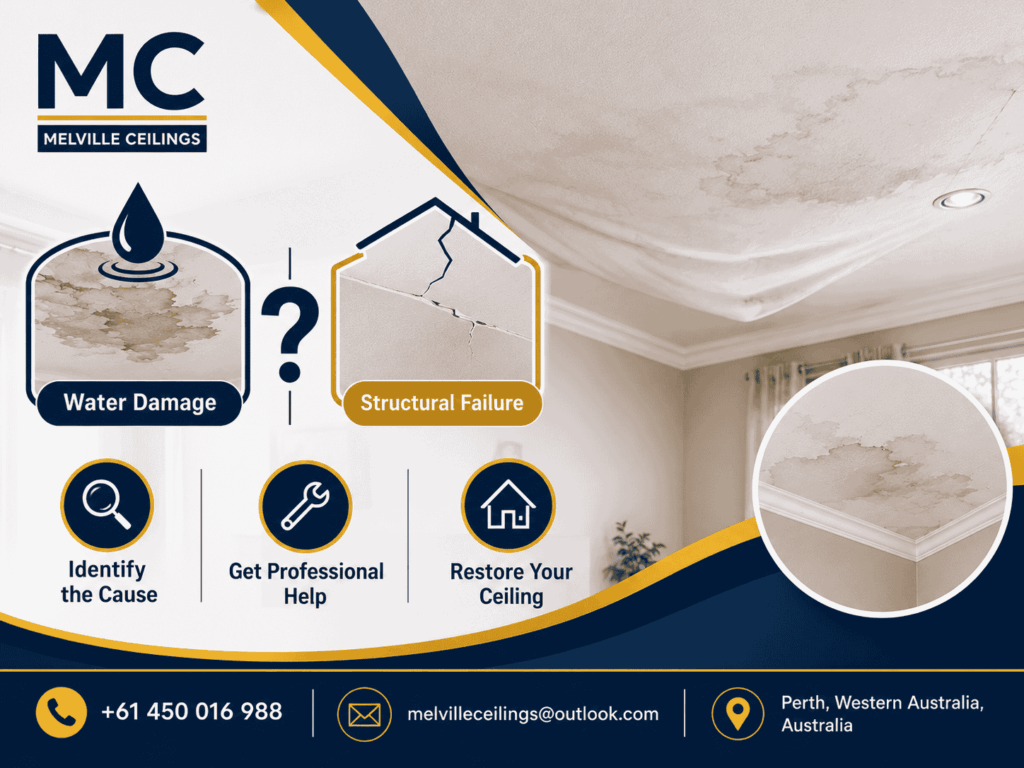
Have you ever noticed a downward bulge in your ceiling that looks like it is dipping slightly? Perhaps there is a crack near the corner, bubbling paint, or a water stain that seems to be getting bigger. These may look like minor issues, but they can sometimes point to a more serious ceiling problem.
Table of Contents
ToggleSagging Ceilings Perth homeowners experience can be a serious concern, as a ceiling that begins to bow or pull away from its supports may become a safety risk. The damage can develop gradually or appear after a roof leak, plumbing issue or storm. To keep your property and its occupants safe, it is important to seek professional assistance.
Let’s look at the common warning signs of a sagging ceiling, what causes the damage, when repairs may be enough and when replacement may be necessary.
What Are the Warning Signs of Sagging Ceilings in Perth Homes?
A ceiling does not always collapse suddenly without showing earlier signs of damage. In many cases, you may notice small changes before the problem becomes more serious. Some common warning signs include:
- Visible dipping or bowing: A section of the ceiling may appear lower than the surrounding area.
- Cracks across the ceiling: New or widening cracks may indicate movement or weakening materials.
- Water stains: Yellow or brown marks can point to moisture entering the ceiling.
- Bubbling or peeling paint: Paint that starts lifting or bubbling may be a sign of water damage.
- Separating joints: Gaps may appear where ceiling sheets meet or where the ceiling joins the wall.
- Loose plasterboard: Sections may look uneven or appear to be pulling away from their supports.
- For instance, imagine noticing a small brown mark above your bedroom window after heavy rain. A few days later, the paint begins to bubble, and the area looks slightly lower. This could indicate that moisture has affected the plasterboard and weakened the ceiling.
If your ceiling is visibly sagging, do not ignore the problem or wait for it to get worse. Keep people away from the affected area and arrange a professional assessment.
What Causes a Ceiling to Sag?
Before treating the ceiling, it is important to understand the cause, as this will determine the type of repair required. Here are some common reasons why ceilings begin to sag:
1. Water Damage
Water leaks and moisture are common causes of ceiling damage. A leaking roof, plumbing issue or storm-related leak can allow moisture to reach the plasterboard.
As the material absorbs water, it may become weaker, heavier and more likely to sag. You may also notice stains, bubbling paint or cracks around the affected section.
2. Ageing Ceiling Materials
Older ceilings can deteriorate over time. The screws and other fittings may weaken, plasterboard may become damaged, and sections may begin to separate from their supports.
This is particularly worth checking in older properties where the ceiling has not been inspected or repaired for many years.
3. Poor Installation or Loose Fixings
Ceiling sheets need to be secured properly. If fixings were not installed correctly or have weakened over time, the plasterboard may begin to move or drop.
This can lead to uneven surfaces, visible gaps and sagging sections.
4. Structural Movement
Movement in a building can place pressure on ceilings and internal surfaces. In some cases, this may lead to cracks, gaps or changes around ceiling joints.
If you notice cracks appearing in several areas, it is worth having the damage assessed rather than treating each crack as an isolated problem.
Is a Sagging Ceiling Dangerous?
Yes, a sagging ceiling can be dangerous, particularly when plasterboard has become loose, weakened or saturated with water.
The weight of damaged material may increase the risk of sections falling. This can put people, furniture and belongings underneath the affected area at risk.
Take these warning signs seriously:
- A large section of the ceiling is visibly dropping.
- The ceiling is heavily water damaged.
- Cracks are spreading or becoming wider.
- Ceiling panels are pulling away from their supports.
- You hear cracking or popping sounds along with visible movement.
If you notice these signs, keep everyone away from the affected room. Do not stand underneath the damaged area, push the ceiling back into position or attempt to remove loose sections yourself.
If water is still entering the ceiling, arrange for the source of the leak to be addressed. If there is a risk of water contacting electrical fittings, avoid the area and seek appropriate professional assistance.
If your ceiling is severely sagging or at risk of collapse, contact a professional who provides Emergency Ceiling Repairs Perth services. They can assess whether urgent repairs or ceiling replacement are needed.
Can Sagging Ceilings Be Repaired or Do They Need Replacement?
Not every sagging ceiling needs to be completely replaced. The right solution depends on the size of the damaged area, the condition of the plasterboard and the cause of the problem.
In some cases, repairing or replacing one affected section may be enough. More extensive damage may require a larger repair or a complete ceiling replacement.
For example, if a small section of your living room ceiling has been affected by a leak that has already been fixed, a localised repair may be suitable. However, if large sections are sagging and the plasterboard has become weak, replacing the damaged ceiling may be the more appropriate option.
Melville Ceilings assesses the damage before recommending the most suitable repair or replacement option.
When Should You Consider Water Damage Ceiling Repairs Perth?
Water damage should not be ignored, even if the ceiling still looks mostly intact.
A leak may leave behind more than a visible stain. Moisture can weaken plasterboard, affect ceiling joints and cause sections to become soft or start sagging.
Therefore, you may need Water Damage Ceiling Repairs Perth if you notice:
- Brown or yellow patches on the ceiling.
- Bubbling or peeling paint.
- Soft or weakened plasterboard.
- Cracks around a water-stained section.
- Warping or visible sagging after a leak.
The first step is to fix the source of the leak. Once the affected area is sufficiently dry, professional Ceiling repairs Perth can begin.
Depending on the damage, the work may involve removing damaged plasterboard, replacing affected sections, patching and restoring the ceiling surface.
Melville Ceilings provides water damage ceiling repairs across Perth, including plasterboard replacement where required.
When Do You Need Emergency Ceiling Repairs Perth?
Some ceiling problems can wait for a scheduled assessment, but others require urgent attention.
If your ceiling is severely sagging, water-soaked, making unusual cracking sounds or showing signs of separation, it may be at risk of collapse.
In these situations, you may need Emergency Ceiling Repairs Perth to assess and address the damage quickly.
You should seek urgent assistance when:
- A large ceiling section is dropping.
- Water-soaked plasterboard is becoming unstable.
- Ceiling panels are separating from the structure.
- Large cracks are spreading quickly.
- Part of the ceiling has already fallen.
Keep people away from the affected space and contact a professional. Do not try to secure or repair an unstable ceiling yourself.
Melville Ceilings provides emergency ceiling repair services across Perth for serious sagging and ceiling damage that cannot wait for a standard booking.
What Other Ceiling and Wall Problems Should You Check?
Sometimes ceiling damage is accompanied by problems in nearby areas. For instance, a water leak may leave marks on both the ceiling and an internal wall.
It is worth checking for:
- Cracks around doors and windows.
- Holes or dents in plasterboard walls.
- Damaged or separating cornices.
- Water stains near wall and ceiling joints.
- Cracks or gaps where the wall meets the ceiling.
If the damage has also affected your walls, professional Wall repair Perth services may be needed alongside ceiling repairs.
Melville Ceilings provides wall repairs for cracks, holes, dents and plaster damage, as well as wall and ceiling restoration work.
How Can Melville Ceilings Help with Sagging Ceilings Perth?
A sagging ceiling needs more than a quick patch over it. The cause and extent of the damage should be assessed before deciding on the right repair.
Melville Ceilings provides professional ceiling repair services for residential and commercial properties throughout Perth. With over 10 years of experience, the team provides repairs for various ceiling problems, including sagging plasterboard, water damage, cracks and general deterioration.
Depending on the condition of your ceiling, the work may involve:
- Assessing the damaged area and identifying the cause of the problem.
- Repairing loose or damaged plasterboard.
- Replacing sections that cannot be repaired.
- Completing ceiling patching and restoration.
- Carrying out full or partial ceiling replacement when required.
The team also provides ceiling repairs, wall repairs and emergency ceiling services across the Perth metropolitan area.
How Can You Prevent Your Ceiling from Sagging?
While not all ceiling problems can be prevented, regular maintenance and early repairs can help reduce the risk of serious damage.
Here are some practical steps homeowners can take:
- Check your roof regularly: Look for damaged roof tiles, loose sheets or other signs of damage that could allow water to enter.
- Fix leaks early: Do not ignore roof or plumbing leaks. Addressing them quickly can help prevent moisture from damaging the ceiling.
- Keep gutters and downpipes clear: Blocked gutters can contribute to water entering parts of your property. Keep them clear of leaves and debris.
- Look for early warning signs: Check for water stains, cracks, bubbling paint or changes in the ceiling surface.
- Arrange professional inspections: If you notice unusual movement, cracks or moisture, have the area assessed by a qualified professional.
- Avoid unnecessary ceiling loads: Do not attach heavy items to ceiling plasterboard without suitable support.
Taking these steps can help you identify problems early and reduce the chance of needing major ceiling repairs or replacement.
Conclusion
A small crack or slight dip in your ceiling may not seem like a major concern at first. However, visible sagging, water stains, loose plasterboard and spreading cracks should never be ignored.
If you notice any of these warning signs at your home or workplace, arrange a professional assessment before the damage becomes more serious. Professional Sagging Ceilings Perth services can include localised repairs, plasterboard replacement or complete ceiling replacement, depending on the condition of the ceiling.
If you are concerned about sagging ceilings, contact Melville Ceilings for professional advice and a free quotation. Call to discuss your ceiling damage and find out which repair option may be suitable for your property.
Suggested Visit: Cornice Repairs Perth
Frequently Asked Questions
Common causes include water leaks, ageing ceiling materials, loose fixings, poor installation and structural movement. Identifying the cause is important before choosing the right repair.
Yes. A sagging ceiling may indicate that the plasterboard or its supports have weakened. Damaged sections could fall and cause injuries. Keep people away from the affected area and arrange a professional assessment.
Yes. If the damage is limited to a small area and the surrounding ceiling is still in good condition, a localised repair may be suitable. More extensive damage may require partial or complete ceiling replacement.
Look for brown or yellow water stains, bubbling paint, soft plasterboard, cracks or visible sagging. These signs may indicate moisture damage. The source of the leak should be fixed before ceiling repairs begin.
Contact a professional urgently if a large section of your ceiling is dropping, water-soaked plasterboard is unstable, cracks are spreading quickly or part of the ceiling has already fallen. Keep people away from the affected area.
Check your roof regularly, repair leaks quickly, keep gutters clear and look for early signs of damage. Professional inspections can also help identify ceiling problems before they become more serious.